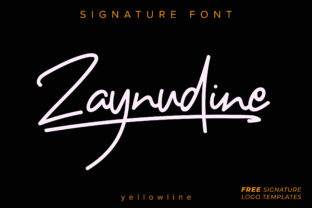
Zaynudine: A Strategic Choice for Purpose-Driven Typography
Zaynudine is not just another font—it’s a deliberate design decision. With clean lines, balanced proportions, and subtle calligraphic warmth, it bridges tradition and contemporary clarity. Its elegance isn’t ornamental; it’s functional. It reads effortlessly at small sizes, holds presence in headlines, and conveys sincerity without pretension. For professionals who rely on visual language to shape perception—whether launching a brand, designing a course, publishing long-form content, or refining a client presentation—Zaynudine offers quiet authority. That matters more than you might assume.
Why Typographic Intentionality Shapes Outcomes
Most people choose fonts reactively: “This looks nice,” “My template uses it,” or “It matches the logo.” But typography is never neutral. It signals tone before a single word is read. Zaynudine communicates grounded confidence—neither corporate-cold nor trend-chasing. That makes it especially effective when your goal is trust-building: educator landing pages, nonprofit annual reports, service-based business websites, or editorial newsletters where credibility hinges on consistency and restraint.
Unlike highly stylized or ultra-thin typefaces, Zaynudine avoids visual fatigue. Its open apertures and moderate contrast support sustained reading—critical for blogs, whitepapers, or digital learning modules. And because it scales well across devices and weights (regular, medium, bold), it reduces the need for workarounds like image-based text or inconsistent fallbacks. That’s not just aesthetic hygiene—it’s operational efficiency.
Where Zaynudine Delivers Measurable Value
Consider these real-world applications—not as trends, but as outcomes-oriented choices:
- Brand identity systems: When paired with a restrained color palette and ample whitespace, Zaynudine helps position a small business or independent creator as thoughtful, experienced, and client-centered—not “just another freelancer.”
- Educational materials: Teachers and course designers report improved student engagement when using Zaynudine in slide decks and handouts. Its legibility reduces cognitive load, letting learners focus on concepts—not deciphering letters.
- Customer-facing documentation: From onboarding guides to support portals, Zaynudine’s warmth softens procedural language. Users perceive instructions as helpful rather than bureaucratic.
- Editorial publishing: Bloggers and newsletter writers using Zaynudine see higher scroll depth and time-on-page metrics—likely because its rhythm supports natural eye movement and retention.
None of this happens by accident. It emerges from alignment between voice, audience expectation, and typographic behavior.
How to Evaluate Fit—Before You Commit
Ask yourself three questions before adopting Zaynudine—or any typeface—as part of your core design system:
- What outcome do I want the reader to feel or do? If the answer is “trust,” “clarity,” or “considered care,” Zaynudine is a strong candidate. If you need urgency, playfulness, or avant-garde distinction, it’s likely misaligned.
- Where will this appear most often? Zaynudine excels in body text and medium-weight headings—but less so in ultra-small captions or large-scale environmental signage where extreme weight or width variation may be needed. Map usage contexts first.
- Does it complement—not compete with—my other assets? Test it beside your logo, photography style, and UI components. Does it unify—or introduce tension? A mismatch here erodes cohesion faster than any single design flaw.
Strategic use starts with constraints, not inspiration.
Common Pitfalls—and How to Avoid Them
Zaynudine’s simplicity makes it easy to underestimate. Used without context, it can fade into background noise—or worse, feel unintentionally generic. Here’s what to watch for:
- Over-reliance on default settings: Using only the regular weight at 16px with no hierarchy creates monotony. Zaynudine gains strength through intentional contrast—pair bold headings with light body text, or adjust line height to improve breathing room.
- Ignoring pairing logic: While Zaynudine works beautifully alone, it also pairs well with neutral sans-serifs (e.g., Inter, Manrope) for data tables or captions. Avoid clashing serifs or overly decorative companions that dilute its calm authority.
- Applying it where personality should lead: A children’s app, a music festival poster, or a streetwear brand may require expressive energy Zaynudine doesn’t provide. Respect genre expectations—don’t force elegance where vitality belongs.
Risk isn’t in using Zaynudine—it’s in using it without asking why.
Practical Integration Tips for Real Workflows
You don’t need a design team to use Zaynudine intentionally. Start small, test iteratively:
- In web projects: Set Zaynudine as your primary font stack with fallbacks (e.g.,
"Zaynudine", "Charter", "Georgia", serif). Adjust letter-spacing slightly (+0.2px) for headings to enhance definition without breaking rhythm. - In presentations: Use Zaynudine for all body copy and speaker notes—but reserve one bold weight for key takeaways only. This trains attention without shouting.
- In print or PDFs: Embed the font fully and export as PDF/X-4 to preserve rendering across devices. Test on both Mac and Windows—some older PDF viewers substitute fonts unpredictably.
- In branding guidelines: Specify exact weights and sizes for each use case (e.g., “H2 = Zaynudine Bold, 28px, line-height 1.3”), not vague terms like “elegant” or “modern.” Clarity prevents drift.
These aren’t stylistic preferences—they’re guardrails against inconsistency.
Long-Term Positioning: Beyond Aesthetics
Typography contributes to what marketers call “perceived expertise”—the unconscious judgment readers make about your competence based on how information is presented. Over time, consistent use of Zaynudine builds recognition, especially in niches where clarity is scarce: legal explainers, financial literacy tools, academic outreach, or technical documentation for non-engineers.
That consistency compounds. A founder using Zaynudine across their website, investor deck, and customer emails signals intentionality—not just in messaging, but in execution. That perception influences conversion, retention, and referral behavior more than most realize.
But longevity requires discipline. Revisit your typographic choices every 12–18 months—not to chase novelty, but to ask: Does this still serve our current goals? Has our audience shifted? Are we communicating with greater precision—or just habit?
Final Thought: Typography as Quiet Strategy
Zaynudine won’t go viral. It won’t win design awards for innovation. What it does—reliably, consistently, unobtrusively—is support human understanding. In an era of shrinking attention spans and rising noise, that’s not modesty. It’s leverage.
Choose Zaynudine when your priority is resonance over reaction, clarity over cleverness, and endurance over novelty. Then use it with purpose: define rules, test assumptions, align with goals, and measure impact—not in likes, but in comprehension, trust, and action.
That’s how a simple, elegant font becomes part of your strategic infrastructure.