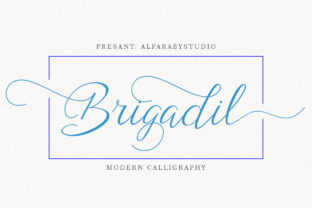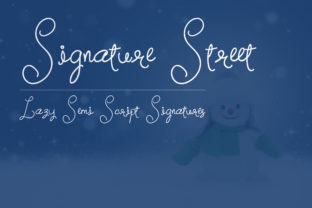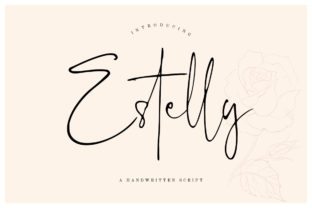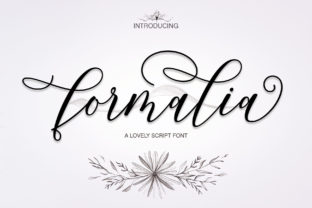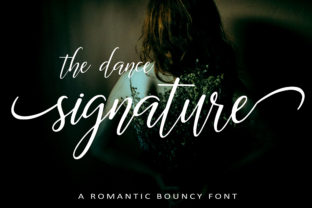
The Dance Signature: A Handwritten Font That Moves With Purpose
If you’ve ever stared at a blank invitation, a minimalist logo mockup, or a photo watermark that just feels “off,” you know how much weight the right font carries—not as decoration, but as quiet intention. The Dance Signature isn’t just another script font. It’s a modern handwritten typeface built with rhythm in mind: its baseline rises and falls like a gentle sway, giving text breathing room, warmth, and unmistakable personality—without sacrificing legibility or polish.
Where It Lives Naturally (and Why It Fits)
You won’t find The Dance Signature in corporate annual reports or legal disclaimers—and that’s by design. It thrives where human connection matters most: in moments people pause to feel, remember, or choose. Think of it less as typography and more as visual tone-of-voice—like choosing the right pen for a thank-you note versus a grocery list.
A wedding planner in Portland uses it for save-the-dates because couples tell her, “It looks like *us*—not like a template.” A Brooklyn-based photographer overlays it lightly on portrait proofs—not to shout, but to soften the digital edge and reinforce authenticity. A small-batch candle maker prints it on kraft labels alongside ingredient lists; the subtle motion echoes the handmade process, not the machinery.
Real Use Cases—Not Just Categories
Let’s get specific—not “logos” in the abstract, but how it works when it matters:
- Branding for service-based solopreneurs: A life coach in Austin uses The Dance Signature for her website headline and business card tagline. Clients say it feels “grounded but open”—a visual echo of her calm, intuitive approach. The dancing baseline avoids stiffness without veering into cutesy or hard-to-read territory.
- Album art and music branding: An indie folk artist applied it to vinyl liner notes and Instagram story highlights. Because the font flows with natural variation—not rigid calligraphy—it mirrors the organic imperfections in her guitar phrasing and vocal delivery. Fans notice the cohesion before they even hear the first track.
- Educational materials with heart: A Montessori teacher in Denver uses it for classroom posters (“Respect Yourself,” “Listen With Your Whole Body”). Kids recognize it as “the kind Mrs. Lee writes in,” making concepts feel personal, not prescriptive. It bridges the gap between authority and approachability—no cartoon fonts needed.
- Digital watermarks that don’t distract: Unlike bold sans-serifs or overly ornate scripts, The Dance Signature sits softly over photography—especially lifestyle, maternity, or travel images. Its light contrast and rhythmic flow let the image breathe while still anchoring authorship. One travel blogger reported fewer DMs asking “Is this yours?” after switching from a generic script.
- Stationery that invites interaction: A stationer in Nashville hand-letters addresses using The Dance Signature as a digital base layer, then traces over it with ink. The result? Consistent yet human—ideal for wedding suites where guests should feel personally seen, not mass-mailed.
What Makes It Work Where Others Don’t
It’s not just “handwritten.” Plenty of fonts mimic handwriting—but many sacrifice clarity at small sizes, or feel too uniform (like typed cursive), or too chaotic (like unedited brush strokes). The Dance Signature balances three things people actually need:
- Natural variation without unpredictability: Letters connect smoothly, but spacing and stroke weight shift subtly—just like real pen-on-paper. That means it reads well at 14pt on a business card and at 60pt on a poster.
- A baseline that moves—but doesn’t wander: That “dancing” quality isn’t random bounce. It’s a controlled, graceful undulation. So quotes in social posts feel alive, not jittery. Invitations feel elegant, not frantic.
- Classy, not costume-y: It avoids flourishes that date quickly or signal “vintage” or “feminine” by default. A male barista used it for his coffee shop’s chalkboard menu redesign—and customers described it as “warm, not fussy.” That versatility is rare in script fonts.
Before You Apply It—A Few Grounded Considerations
Like any tool, The Dance Signature shines brightest when matched to context—not just aesthetics. Ask yourself:
- Is legibility non-negotiable? It’s highly readable at medium-to-large sizes, but avoid using it for body copy, app interfaces, or dense legal text. Reserve it for headlines, names, short phrases, and accents.
- Does your brand voice lean warm, personal, or artisanal? If your messaging is sharp, technical, or highly formal (e.g., cybersecurity firm, tax advisory), this font may soften your message more than intended. It’s not “unprofessional”—it’s just professionally intimate.
- Are you pairing it with other fonts? It pairs beautifully with clean, neutral sans-serifs (think Inter, Poppins, or Lato) for balance. Avoid pairing it with other decorative or script fonts—that creates visual competition, not harmony.
- Are you using it digitally or in print? On screen, test it across devices—especially mobile. Its rhythm reads best with generous line height and sufficient contrast against backgrounds. In print, it holds up well on textured papers (linen, cotton, kraft), where its organic feel deepens.
Who Benefits Most—and How
You don’t need to be a designer to use The Dance Signature well. A homeschooling parent uses it for weekly schedule boards—making routines feel intentional, not rigid. A freelance copywriter drops it into Canva proposals to signal care in craft, not just speed. A boutique hotel in Asheville applies it to in-room welcome notes and local attraction guides—giving guests a tactile sense of place before they even step outside.
What ties these uses together isn’t style—it’s substance through subtlety. This font doesn’t draw attention to itself. It draws attention to what’s being said, and to who’s saying it. That’s why photographers, educators, makers, and service providers return to it again and again—not as a trend, but as a reliable way to make their work feel unmistakably, quietly human.
So if you’re choosing a font for something people will hold, share, save, or remember—ask not just “Does it look nice?” but “Does it move the way the moment does?” With The Dance Signature, the answer, more often than not, is yes.