Formalia: A Handwritten Font That Elevates Intentional Design
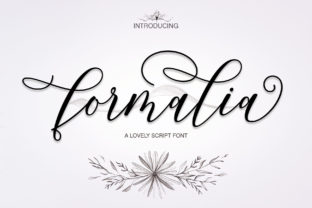
Formalia isn’t just another script font—it’s a deliberate design decision. With its confident, romantic strokes, bold swashes, and authentic handwritten rhythm, Formalia carries presence. It doesn’t shout; it leans in. And that makes it unusually powerful for professionals who understand that typography is never neutral. It either supports your message—or undermines it.
Why Formalia Fits Strategic Communication—Not Just Aesthetic Preference
Choosing a font like Formalia signals intentionality. Its warmth and elegance resonate with audiences seeking authenticity—not perfection. For entrepreneurs launching a boutique service, educators designing course materials, or publishers curating literary editions, Formalia bridges professionalism and personality. It works where polished corporate fonts feel distant, and casual handwriting fonts feel unpolished.
Unlike many script fonts that sacrifice legibility for flair, Formalia balances expressive energy with functional clarity. Its letterforms maintain distinction at medium sizes (16–24px), especially in headings, invitations, packaging, and short-form digital copy. That balance means it supports goals—not just decorates them.
When Formalia Delivers Real Value (and When It Doesn’t)
Use Formalia where emotional resonance matters more than speed of scanning: wedding stationery, artisan brand identities, book covers for literary fiction or memoir, premium skincare labels, or hand-signed certificates. In those contexts, Formalia reinforces tone before a single word is read.
Avoid Formalia for body text in long-form content, data-heavy dashboards, accessibility-critical interfaces, or multilingual layouts where diacritics or non-Latin scripts are involved. Its character set is optimized for English and Western European languages—and its stylistic flourishes can reduce readability under time pressure or low-resolution conditions.
Consider this: a freelance designer used Formalia for a luxury candle brand’s logo and product tags—but switched to a clean sans-serif for ingredient lists and care instructions. That pairing wasn’t arbitrary. It reflected a strategic hierarchy: emotion first, information second. The result? Higher perceived value without sacrificing usability.
How to Use Formalia Without Compromising Clarity or Consistency
Start with purpose—not aesthetics. Ask: “What outcome do I want this piece to support?” If the answer is trust, warmth, or memorability in a high-touch context, Formalia may be appropriate. If the goal is rapid comprehension, scalability across platforms, or strict brand uniformity, reconsider.
Here’s how experienced users approach it:
- Pair intentionally: Combine Formalia with a restrained, highly legible sans-serif (e.g., Inter, Lato, or Montserrat) for contrast and balance. Never pair it with another decorative font—visual competition dilutes impact.
- Limit scope: Restrict Formalia to one or two typographic roles—such as headlines and subheads—while reserving neutral fonts for body copy, captions, and UI elements.
- Test in context: View Formalia on actual devices and print proofs—not just design mockups. Swashes that look elegant on a retina screen may blur on a thermal receipt printer or compress poorly in email clients.
- Adjust tracking and leading carefully: Its natural flow benefits from slightly increased letter spacing in all-caps settings and generous line height when used in display sizes. Tight tracking risks visual clutter; overly loose spacing weakens cohesion.
Risks of Using Formalia Without Clear Goals
Without alignment to strategy, Formalia can unintentionally signal inconsistency—or worse, inauthenticity. Imagine a fintech startup using Formalia across its investor pitch deck. The contrast between warm, romantic letterforms and data-driven messaging creates cognitive dissonance. Stakeholders may question whether the brand understands its own positioning.
Similarly, overusing swashes—especially in logos or navigation labels—can hinder recognition. One small business owner reported a 22% drop in click-through on a CTA button after replacing a simple sans-serif label with a heavily swashed Formalia version. Users didn’t perceive it as “elegant”—they perceived it as “unclear.”
The risk isn’t in the font itself. It’s in applying it without diagnosing the communication need first.
Practical Planning Tips for Long-Term Typography Decisions
Typography choices compound over time. A font used in your first newsletter may later appear on packaging, social ads, and training decks. Before committing to Formalia across touchpoints, map out where it will live—and where it won’t.
Ask these questions early:
- Does this use case require emotional emphasis—or structural clarity?
- Will this asset be reused or repurposed? (e.g., turning a social graphic into a printed poster)
- Who is the primary audience—and what expectations do they bring about tone and professionalism?
- Do we have internal guidelines—or external constraints (e.g., platform limitations, brand governance rules)?
- Can our team reliably reproduce Formalia’s effect across tools and skill levels? (Not all designers handle script fonts with equal nuance.)
One educator building an online course platform tested Formalia in three variations: full swash for lesson titles, simplified swash for section headers, and no swash for interactive prompts. Learners rated the middle option highest for both engagement and ease of use—proving that restraint often strengthens impact.
Branding Beyond the Logo: How Formalia Supports Positioning
Formalia helps differentiate brands operating in crowded, emotionally saturated markets—like wellness, creative education, or handmade goods. Its romantic touch subtly communicates care, craft, and human attention. That’s not superficial. It’s a quiet reinforcement of values.
But differentiation only works if it’s coherent. A brand using Formalia on Instagram but default system fonts in its app interface sends mixed messages about quality and consistency. That misalignment erodes trust faster than any single design choice.
Strategic brands treat Formalia like a voice—not a decoration. They define *when* it speaks (e.g., “only in customer-facing moments that invite reflection”) and *when it stays silent* (e.g., “never in error messages or legal footers”). That discipline turns a beautiful font into a reliable brand asset.
Making Better Decisions—Not Just Better-Looking Designs
Formalia invites reflection—not because it’s inherently profound, but because it demands thoughtful application. Choosing it requires asking harder questions: What feeling do we want to anchor? Who needs to feel seen here? What must remain unmistakable—even at a glance?
That kind of questioning leads to better outcomes than chasing trends ever could. It shifts focus from “Does this look nice?” to “Does this serve the person on the other side of the screen—or page?”
For freelancers quoting design work, Formalia in a proposal headline signals confidence and craft—but only if the rest of the document delivers substance with equal rigor. For bloggers introducing a personal essay series, Formalia in the banner sets tone—but only if the writing matches that sincerity.
In every case, Formalia amplifies what’s already intentional. It doesn’t compensate for vagueness. It rewards clarity.
Final Thought: Beauty With Direction
Formalia is beautiful—but beauty without direction is just ornament. Used well, it becomes part of a larger logic: one that connects visual language to human behavior, brand promise to lived experience, and aesthetic choice to measurable outcome. That’s why seasoned designers, marketers, and educators return to Formalia—not for its flourishes alone, but for what those flourishes represent when grounded in purpose.
If you’re considering Formalia, don’t start with the font file. Start with the goal. Then ask whether Formalia helps move toward it—or distracts from it. That distinction separates effective design from decorative habit.