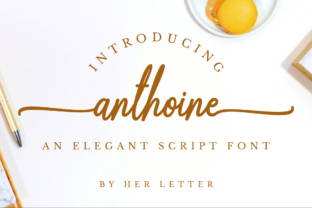
School Teacher Font: Playful & Youthful Design
There’s a quiet magic in fonts that don’t just communicate—they invite. School Teacher is one of those rare typefaces: a fun and playful font with a whimsical twist, designed to evoke warmth, curiosity, and gentle nostalgia without slipping into kitsch. It’s not cartoonish or overly cutesy—it’s thoughtfully crafted, with soft curves, uneven baselines, and subtle hand-drawn imperfections that suggest a friendly teacher’s chalkboard note or a child’s carefully printed invitation. That balance—between charm and clarity—is what makes School Teacher genuinely useful for real-world creative work.
Why Designers Reach for School Teacher
Unlike many “cute” fonts that sacrifice legibility or versatility, School Teacher holds up across sizes and contexts. Its rounded terminals, open counters, and generous spacing keep it readable even at smaller point sizes—unusual for a display font with such personality. That means it works where others fail: on product packaging labels, social media banners, classroom posters, or even embroidered patches.
What sets it apart isn’t just appearance—it’s intention. Every glyph feels like it was drawn with care, not algorithmic uniformity. The lowercase “a” has a gentle loop; the “g” tilts just slightly; the “y” curls with soft confidence. These details aren’t decorative flourishes—they’re cues that signal approachability, sincerity, and human-centered design.
Creative Applications That Feel Authentic
Here’s where School Teacher shines—not as a gimmick, but as a strategic choice:
- Educational materials for early learners or parent-facing resources—think welcome packets, reading logs, or bilingual flashcards. Its friendliness lowers barriers without oversimplifying content.
- Small business branding for bakeries, toy shops, indie bookstores, or craft studios. Paired with a clean sans-serif (like Inter or Lato) for body text, School Teacher adds memorable character to logos and signage while keeping tone grounded.
- Digital content where warmth matters: email headers for newsletters about parenting, homeschooling, or creative learning; Instagram story text overlays for educators sharing classroom wins; printable planners aimed at students or teachers.
- Printed goods like greeting cards, stickers, or gift tags—especially when paired with muted pastels, textured paper, or simple line illustrations.
Crucially, School Teacher avoids looking “childish” when used intentionally. A preschool app logo benefits from its energy—but so does a mindfulness journal for adults seeking gentle self-guidance. The key lies in context, color, and supporting design choices—not the font alone.
How Different Users Can Adapt It Thoughtfully
Designers often start by establishing hierarchy: use School Teacher for headlines or short callouts only, then switch to a neutral, highly legible typeface for paragraphs. This preserves impact without overwhelming the eye. Try adjusting letter-spacing slightly tighter for titles, or looser for single-line quotes—it responds well to subtle tuning.
Educators and curriculum developers can use it to differentiate student-facing elements (e.g., activity instructions, reflection prompts) from formal assessments or policy documents. That small typographic shift signals psychological safety and openness—without needing to rewrite a single sentence.
Bloggers and content creators find it effective in visual storytelling: overlaying short phrases on photos of handmade crafts, nature walks, or kitchen experiments. Because it’s expressive but not loud, it enhances imagery instead of competing with it.
Small business owners should test School Teacher across touchpoints before committing. Does it look balanced on a square Instagram post? Does it remain legible on a mobile-optimized landing page? Does it pair naturally with your brand colors? Real-world testing—not just mood board appeal—ensures consistency and audience resonance.
Keeping Results Clear and Audience-Friendly
A playful font carries responsibility: it must serve the message, not distract from it. To keep School Teacher effective:
- Limit usage to one primary role per layout—headline, logo, or pull quote—not all three simultaneously.
- Avoid all-caps settings, which reduce its natural rhythm and legibility. Let its lowercase charm breathe.
- Respect contrast: use it against solid, uncluttered backgrounds. Busy textures or low-contrast color combos mute its warmth.
- Test readability with actual users, especially if serving neurodiverse audiences, children, or older adults. What feels joyful to one person may feel unclear to another.
Remember: typography is part of your communication strategy—not just decoration. When School Teacher appears in a newsletter subject line, it subtly tells subscribers, “This isn’t corporate noise. This is made with care.” That impression builds trust faster than any tagline.
Real Ideas You Can Use This Week
You don’t need a full rebrand to explore School Teacher. Try these low-lift, high-impact uses:
- Create a printable “Weekly Win Tracker” for students or personal goals—use School Teacher for section headers (“My Big Idea,” “What I Tried,” “What I Learned”) and a clean sans-serif for checkboxes and notes.
- Redesign your email signature with a single line in School Teacher: “Made with curiosity” or “Learning alongside you.” Keep everything else professional and minimal.
- Design a set of Instagram carousel slides for a workshop promo—headline each slide in School Teacher, then explain details in a neutral typeface. The contrast draws attention while maintaining clarity.
- Update your website’s “About” page subheadings—swap generic headings for warm, human-sounding lines like “How We Got Started” or “Why This Matters”—set in School Teacher to reinforce authenticity.
None of these require coding skills or a designer on retainer. They rely instead on thoughtful selection and restraint—qualities that separate memorable work from forgettable trends.
School Teacher doesn’t ask you to be childish. It asks you to be kind—to your audience, your message, and the quiet power of well-chosen type. Used with purpose, it becomes more than a font. It becomes part of your voice.