Filia: A Display Font Trio That Bridges Nostalgia and Modern Clarity
Typography isn’t just about legibility—it’s about tone, timing, and texture. In a digital landscape saturated with sleek minimalism and algorithmically optimized sans-serifs, Filia arrives not as a reaction, but as a recalibration. Inspired by classic posters—from mid-century travel advertisements to hand-printed concert bills—Filia is a thoughtfully crafted display font trio that balances vintage warmth with contemporary usability. It doesn’t mimic the past; it interprets it with intention.
What Makes Filia More Than Just “Retro”
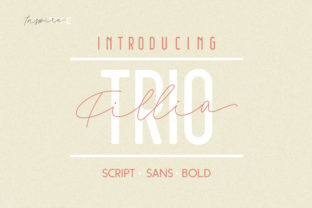
Filia consists of three complementary styles: a bold serif with subtle ink-trail contrast, a clean yet characterful sans-serif with softened terminals, and a tight, expressive inline variant designed for impact at scale. Unlike many retro-inspired fonts that lean heavily on distressed textures or exaggerated quirks, Filia prioritizes restraint. Its letterforms retain the human rhythm of hand-drawn lettering—slight asymmetries in curve weight, gentle tapering on stems, and spacing that breathes without feeling loose—but they’re engineered for crisp rendering across screens, print, and variable environments.
This balance is intentional—and increasingly rare. Many designers reach for nostalgic typefaces hoping to evoke authenticity, only to find them clashing with modern UI constraints or failing at small sizes. Filia avoids that pitfall by building its retro feel into structure, not surface. The serif’s bracketed serifs nod to 1950s typography, but its x-height and open counters ensure readability on mobile. The inline version carries visual energy without sacrificing scalability—ideal for hero banners, podcast cover art, or limited-edition packaging where distinction matters.
Rising Demand for Intentional Typography in a Homogenized Digital World
Over the past five years, we’ve seen a quiet but steady shift away from default system fonts and ultra-generic display families. Tools like Google Fonts and Adobe Fonts have democratized access—but also diluted differentiation. When every startup landing page uses Inter or Poppins, brand voice flattens. Users don’t consciously notice the font—but they *do* register the absence of personality, warmth, or memorability.
This isn’t nostalgia for nostalgia’s sake. It’s a response to real user expectations: audiences now associate visual distinctiveness with trustworthiness and care. A study by the Design Management Institute found that design-led companies outperformed the S&P 500 by over 200%—not because they used more fonts, but because their typography supported cohesive, human-centered communication. Filia fits naturally into that framework. Its trio format invites thoughtful hierarchy: use the serif for headlines that need gravitas, the sans for subheads requiring clarity, and the inline for moments demanding emphasis—like a call-to-action button, a limited-time offer tag, or a chapter divider in an ebook.
How Filia Fits Real Creative Workflows—Not Just Mood Boards
For freelancers building client brands, Filia offers something practical: typographic versatility without complexity. You don’t need custom lettering or multiple third-party fonts to establish visual rhythm. One family covers expressive headline roles, functional supporting text, and decorative accents—all with consistent proportions and spacing logic. That means faster mockups, fewer licensing headaches, and smoother handoffs to developers who appreciate predictable line heights and responsive behavior.
Consider a small business owner launching a local artisan coffee roastery. They want warmth and craft—but also professionalism and clarity. Using Filia, they might set their shop sign in the serif (printed on matte-finish wood), use the sans-serif for menu items (clean, legible at arm’s length), and apply the inline style sparingly—on a seasonal blend label or a social media graphic announcing a latte art workshop. No forced “vintage” filters. No mismatched fonts fighting for attention. Just one cohesive system that supports both storytelling and function.
Similarly, educators creating online course materials benefit from Filia’s structural clarity. Its generous apertures and open forms improve scanability—especially important for learners accessing content on varied devices. And because the trio shares a common skeleton, transitions between sections feel intuitive, not jarring. A module title in the serif, learning objectives in the sans, and key takeaways highlighted in the inline? That’s visual pedagogy—not decoration.
Evolving Beyond “Display-Only”: Where Filia Gains Utility
Historically, retro display fonts were relegated to logos, posters, or one-off campaigns—too stylistic for sustained reading. But Filia challenges that limitation. Its sans-serif variant, in particular, has been tested successfully in longer-form contexts: email newsletters, blog intros, even slide decks where visual consistency reinforces message retention. It’s not meant to replace body text fonts like Lora or Source Serif—but it *does* expand what “display” can mean in practice.
This evolution mirrors broader shifts in how we consume information. Attention spans may be shorter, but engagement is deeper when design feels considered—not curated by algorithm, but shaped by craft. Filia reflects that: it rewards close looking. The subtle variation in stroke weight invites the eye to linger. The balanced negative space gives breathing room without emptiness. These aren’t gimmicks—they’re cues that signal respect for the reader’s time and attention.
Practical Tips for Getting Started With Filia
- Start with contrast, not coverage: Use just one Filia style first—perhaps the serif for your main headline—and layer in others only where hierarchy or emphasis demands it.
- Respect its role: Filia excels at medium-to-large sizes (24px and up). Avoid using the inline variant below 36px—it loses definition. Pair it with a neutral, highly legible body font like IBM Plex Sans or Merriweather.
- Test in context: Preview Filia on actual devices—not just desktop browsers. Its warmth reads differently on OLED vs. e-ink, and its spacing adapts meaningfully across viewports.
- Think beyond color: Because Filia carries so much character in form, consider using monochrome or duotone treatments before reaching for gradients or overlays. Let the letterforms speak first.
Why This Moment Matters for Thoughtful Type Choices
We’re no longer choosing fonts solely for technical compatibility or trend alignment. We’re selecting them for emotional resonance, accessibility integrity, and long-term brand coherence. Filia meets that moment—not by chasing novelty, but by honoring craft traditions while adapting intelligently to today’s constraints and opportunities.
That’s evident in how it’s being adopted: not just by designers seeking aesthetic flair, but by educators simplifying complex topics, marketers building community-driven brands, and developers embedding typographic intention into component libraries. Its retro feel isn’t escapist—it’s grounding. In a world of rapid iteration and constant updates, Filia offers visual continuity without rigidity.
And perhaps most importantly, it reminds us that good typography doesn’t shout. It settles in. It feels familiar, yet fresh. It supports meaning—never obscures it. Whether you’re drafting a keynote slide, designing a newsletter footer, or choosing a font for your personal portfolio, Filia invites you to slow down just enough to make a choice that lasts—not just through the next redesign cycle, but through the quiet accumulation of everyday impressions.