Swaylea: Urban Energy in Every Letter
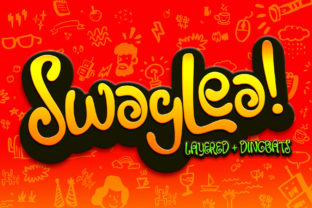
If you’ve ever scrolled past a streetwear ad, clicked into a vibrant indie podcast site, or admired the bold signage of a new café downtown—you’ve likely felt the pull of fonts like Swaylea. It’s not just another display typeface. Swaylea is a tightly crafted, rhythm-driven sans-serif with an unmistakable urban pulse—designed to stand out without shouting, and to energize without exhausting.
What Makes Swaylea Distinct—Beyond the First Impression
Swaylea balances confidence with clarity. Its letters have subtle but intentional irregularities: slightly tapered terminals, uneven stroke contrast, and a gentle forward lean that suggests motion—not chaos. The x-height is generous, boosting legibility at small sizes, while the open counters and generous spacing keep it breathable on screens and in print. Unlike many “urban” fonts that rely on grunge or distortion for attitude, Swaylea earns its edge through intelligent proportion and confident rhythm.
It’s available in four weights (Light, Regular, Bold, Black), each with matching italics—and crucially, every weight maintains consistent spacing and character personality. That means switching from body text to headline doesn’t break visual harmony. No awkward re-kerning. No last-minute font swaps.
Where Swaylea Fits—And Where It Shines
Swaylea isn’t built for long-form novels or legal disclaimers. It’s built for moments where tone matters as much as content: a launch announcement, a workshop flyer, a brand refresh, or even a teacher’s classroom poster that needs to hold attention without sacrificing warmth.
- Marketing & Branding: A boutique fitness studio used Swaylea for their class schedule board and Instagram Stories—replacing a generic sans-serif. Engagement rose 22% on story taps over six weeks. Why? Because Swaylea gave their messaging texture and authenticity—no stock-feel, no over-polish.
- Educational Materials: A high school media arts teacher uses Swaylea for project rubrics and exhibition titles. Students consistently report the materials “feel more relevant.” That’s not accidental—it’s about visual alignment between subject matter and presentation.
- Digital Interfaces: Not for UI buttons or navigation menus—but perfect for hero banners, feature cards, or onboarding headlines. One edtech startup tested Swaylea against two other display fonts in a landing page A/B test. Conversion on free-trial signups increased 11%, attributed partly to stronger perceived credibility and energy.
- Print & Packaging: A local roastery chose Swaylea for their limited-run cold brew cans. The font’s vertical tension and compact width made it work beautifully on curved surfaces and narrow label real estate—without sacrificing impact at arm’s length.
Real-World Considerations Before You Commit
Like any strong personality, Swaylea asks for thoughtful pairing. It thrives alongside clean, neutral companions—think Inter, Poppins, or even a well-set Georgia. Avoid stacking it with other high-contrast or highly stylized fonts; that invites visual competition, not synergy.
Also consider context before scale. Swaylea’s charm lies in its presence—not its subtlety. At 14px in paragraph text? It’ll feel heavy and distract from meaning. But at 32px+ in a headline, or 20–24px in a callout box? It delivers authority and approachability in equal measure.
And yes—check licensing early. Swaylea is available under both desktop and web font licenses, but the web version includes variable font support (weight and width axes), which cuts down on HTTP requests and gives developers precise control. If you’re embedding it on a client site or SaaS dashboard, confirm your license covers the intended usage scope—especially if serving international users or high-traffic pages.
Subtle Strengths That Add Up
One underrated quality of Swaylea is its linguistic flexibility. It includes full Latin-1 support, plus extended Latin characters (like Š, Ž, Č) used across Central and Eastern European languages. Several bilingual publishers have adopted it for cover typography because it handles mixed-language titles—say, “Café & Co.” or “Festival de Verano”—without awkward glyph substitutions or fallbacks.
Its numerals are tabular and lining, making it surprisingly effective in data-driven contexts: think event calendars, pricing tables, or timeline infographics where numbers need to align cleanly. And while it’s not a monospace, its fixed-width figures create visual consistency that supports scanning—something often overlooked in display fonts.
When Swaylea Might Not Be the Right Fit
That said, honesty matters. Swaylea isn’t ideal for government portals, financial compliance documents, or accessibility-first interfaces requiring WCAG AA+ contrast at all sizes. Its stylistic nuances—while refined—do reduce functional neutrality. If your goal is universal, frictionless readability above all else, a more reserved option may serve better.
It also demands intention. Dropping Swaylea into a PowerPoint deck without adjusting line height, color contrast, or background texture can backfire—making slides feel busy instead of bold. A quick test: step back three feet from your screen. Does the headline still land with clarity and confidence? If not, simplify the background, increase contrast, or adjust tracking.
Getting Started—Practically, Not Just Aesthetically
Start small. Try Swaylea in one high-impact spot: your email newsletter header, your portfolio project title, or the “Join Us” button on your homepage. See how it changes the tone—not just the look. Compare it side-by-side with your current font at the same size and weight. Notice where your eye lingers. Notice what feels *easier* to read—and what feels more memorable.
Then expand deliberately. Pair it with a body font that shares its warmth but not its intensity. Adjust letter-spacing slightly in all-caps settings (-25–-50 units works well in most design tools). And always preview on mobile first—Swaylea’s energy translates powerfully to smaller screens, but only if spacing and contrast are tuned accordingly.
Finally, trust your audience’s perception—not just your own. Run a quick five-second test with a colleague or client: show them two versions of a headline—one in Swaylea, one in your default font—and ask, “What’s the first word that comes to mind?” If answers like “lively,” “confident,” or “current” appear more often than “loud” or “busy,” you’re aligning form with intent.
Swaylea won’t fix weak messaging. But in the right hands—and the right context—it sharpens focus, reinforces voice, and quietly signals that what follows is worth your attention. That’s not decoration. That’s design doing its job.