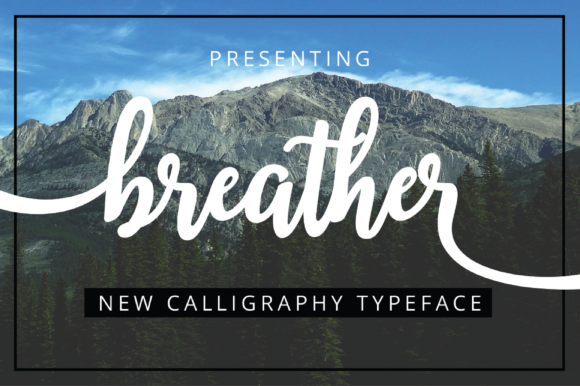
Breather: A Font That Offers Calm and Simplicity in Design
In the world of typography, where visual impact often takes precedence, there’s a growing appreciation for fonts that offer both aesthetic appeal and emotional resonance. Breather is one such font that stands out not just for its design but for the calm and refreshing feel it brings to any project. Whether you're working on a website, a brochure, or a digital product, Breather offers a contemporary simplicity that can elevate your designs in subtle yet meaningful ways.
A Modern Approach to Typography
Breather is a sans-serif typeface designed with clean lines and open spacing, making it ideal for both digital and print media. Its structure is rooted in modern minimalism, which allows it to adapt seamlessly across various platforms and applications. The font's name itself hints at its defining characteristic: a sense of relief and clarity that comes from its balanced proportions and gentle curves.
What makes Breather unique is its ability to maintain readability without sacrificing style. Unlike some fonts that prioritize boldness or ornamentation, Breather focuses on clarity and approachability. This makes it particularly well-suited for projects where communication is key—such as branding, user interfaces, and informational content.
Comparing Breather to Similar Fonts
When considering typography options, it's important to understand how different fonts stack up against one another. Breather shares similarities with other popular sans-serif fonts like Montserrat, Roboto, and Open Sans, but it distinguishes itself through its more organic and human-like appearance.
- Montserrat: While Montserrat is known for its strong geometric structure and versatility, it can sometimes feel rigid compared to Breather's softer curves.
- Roboto: Roboto is a widely used font with a modern look, but it tends to be more utilitarian than expressive. Breather adds a touch of personality without compromising functionality.
- Open Sans: Open Sans is excellent for readability and accessibility, but it lacks the subtle elegance that Breather brings to the table.
These comparisons highlight that while Breather isn't the only option available, it offers a distinct balance between form and function that many designers find appealing.
Strengths and Limitations of Breather
One of the primary strengths of Breather is its versatility. It performs well in both large-scale displays and smaller text sizes, making it suitable for a wide range of design needs. Additionally, its neutral tone means it can easily integrate into various design themes without overpowering them.
However, like any font, Breather has its limitations. It may not be the best choice for projects that require a more dynamic or expressive typographic style. In situations where a bolder or more dramatic font is needed, Breather might fall short. That said, it excels in environments where clarity and calm are priorities.
When to Choose Breather
Breather is an excellent choice when you want to create a sense of tranquility and professionalism in your design. It works particularly well in the following scenarios:
- Branding: For logos, websites, and marketing materials that aim to convey trust and reliability.
- User Interfaces: In web and app design, where readability and ease of use are critical.
- Informational Content: For brochures, reports, and instructional materials that require clear communication.
- Minimalist Designs: When a clean, uncluttered aesthetic is desired.
By choosing Breather, you're not just selecting a font—you're investing in a design language that prioritizes clarity, simplicity, and emotional comfort.
Practical Examples of Breather in Use
To better understand how Breather can enhance your work, consider these practical examples:
Example 1: A wellness brand looking to promote relaxation and mindfulness might use Breather in their website headers and body text. The font's calming presence supports the brand's message without overwhelming the viewer.
Example 2: A financial services company aiming for a professional and trustworthy image could incorporate Breather into their annual reports and client communications. Its clean, modern look aligns with the industry's need for clarity and precision.
Example 3: A small business owner creating a menu for a café might opt for Breather to ensure the text is easy to read while maintaining a friendly and inviting atmosphere.
These examples illustrate how Breather can be tailored to fit a variety of contexts, making it a valuable addition to any designer's toolkit.
Evaluating Alternatives and Making Informed Choices
While Breather is a strong contender in the world of typography, it's always wise to explore alternatives based on your specific needs. Consider the following factors when deciding whether Breather is the right choice for your project:
- Design Purpose: Does your project require a more expressive or dynamic font? If so, Breather may not be the best fit.
- Target Audience: Will your audience benefit from a calm and approachable font, or do they expect something more vibrant?
- Platform Compatibility: Ensure that the font you choose works well across all intended platforms, including mobile and desktop devices.
- Accessibility: Always test your design for readability, especially for users with visual impairments.
By carefully evaluating these factors, you can make a more informed decision about whether Breather—or another font—is the best match for your creative vision.
Conclusion
Breather is more than just a font—it's a design philosophy that values simplicity, clarity, and emotional resonance. Whether you're looking to create a calming atmosphere or achieve a professional look, Breather offers a versatile and elegant solution. By understanding its strengths, limitations, and appropriate use cases, you can confidently incorporate it into your next project and take your designs to the next level.